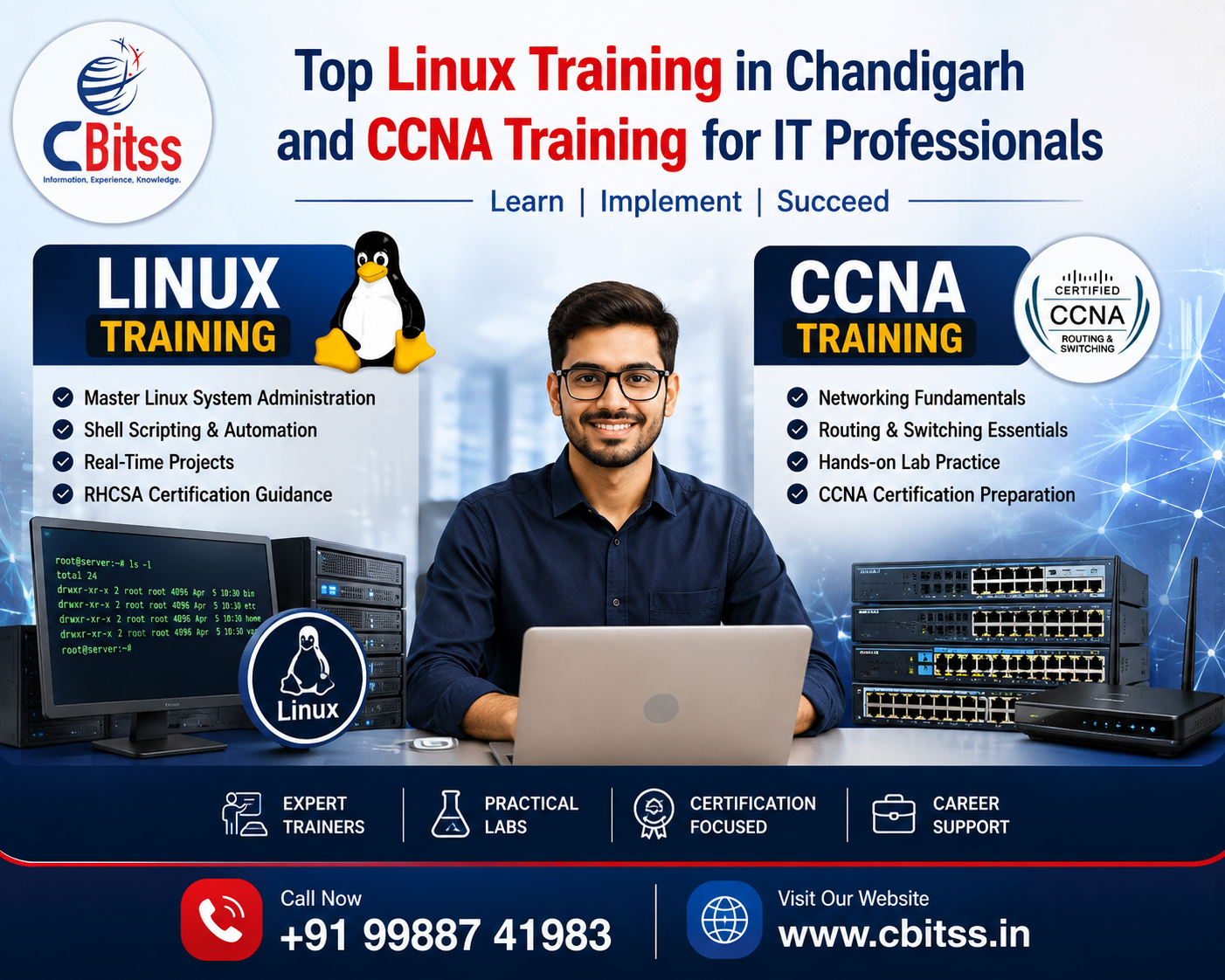
The IT industry is evolving rapidly, creating a growing demand for professionals with expertise in networking and operating systems. Organizations across the world rely on secure networks and reliable Linux servers to manage their daily operations. As a result, skilled networking and system administration professionals are among the most sought-after candidates in today’s job market. If you are planning to build a successful career in IT infrastructure, enrolling in ccna training in chandigarh and Linux Training in Chandigarh can provide the practical knowledge and technical skills needed to succeed.
A professional course combines theoretical concepts with hands-on practical sessions, enabling students to configure networks, manage Linux servers, troubleshoot connectivity issues, and understand enterprise-level IT environments. Whether you are a student, graduate, working professional, or someone looking for a career change, learning Linux and CCNA can significantly improve your employment opportunities.
Why Choose Linux and CCNA as a Career?
Modern businesses depend on secure computer networks and stable server infrastructure. Banks, software companies, telecom organizations, educational institutions, healthcare providers, and government departments all require skilled professionals who can install, configure, secure, and maintain their IT systems.
By learning Linux and Cisco networking, students gain valuable technical skills that are applicable across multiple industries.
Some major career benefits include:
- High demand in the IT industry
- Excellent salary packages
- Global career opportunities
- Opportunities in cloud computing
- Strong freelancing and consulting potential
- Foundation for advanced cybersecurity certifications
- Career growth in network administration and system engineering
As companies continue investing in digital infrastructure, professionals with networking and Linux expertise remain highly valuable.
What is CCNA?
CCNA (Cisco Certified Network Associate) is one of the world’s most recognized networking certifications. It provides a strong foundation in computer networking and prepares students to configure, operate, and troubleshoot enterprise networks.
A professional CCNA course covers topics such as:
- Networking Fundamentals
- OSI and TCP/IP Models
- IPv4 and IPv6 Addressing
- Routing and Switching
- VLAN Configuration
- Inter-VLAN Routing
- Access Control Lists (ACLs)
- Wireless Networking
- Network Security
- NAT and DHCP
- WAN Technologies
- Network Troubleshooting
Students also gain practical experience using Cisco routers and switches, helping them understand real-world networking environments.
What is Linux?
Linux is one of the most widely used open-source operating systems in the world. It powers web servers, cloud infrastructure, enterprise applications, supercomputers, and embedded systems.
Linux administrators are responsible for installing, configuring, monitoring, and maintaining Linux servers while ensuring security and system performance.
Professional Linux training generally includes:
- Linux Installation
- File System Management
- Linux Commands
- User and Group Management
- File Permissions
- Shell Scripting
- Process Management
- Package Management
- Networking Configuration
- SSH
- Apache Web Server
- DNS
- FTP
- NFS
- Firewall Configuration
- Backup and Recovery
These practical skills prepare students for system administration roles in enterprise environments.
Why Learn Linux and CCNA Together?
Linux and networking complement each other perfectly. Every Linux server operates within a network, making networking knowledge essential for Linux administrators.
Similarly, network engineers often work with Linux-based servers, firewalls, monitoring tools, and cloud environments.
Learning both technologies helps students:
- Understand complete IT infrastructure
- Configure enterprise networks
- Manage Linux servers
- Improve troubleshooting skills
- Prepare for cloud computing
- Build cybersecurity foundations
- Increase job opportunities
Professionals with both networking and Linux expertise are highly preferred by employers because they can handle multiple aspects of IT infrastructure.
Importance of Practical Training
Practical experience plays a crucial role in technical education. Professional training institutes provide hands-on lab sessions where students work with routers, switches, Linux servers, virtual machines, and enterprise networking tools.
Students learn by performing tasks such as:
- Router Configuration
- Switch Configuration
- VLAN Implementation
- Linux Installation
- Server Configuration
- Firewall Setup
- SSH Configuration
- Network Troubleshooting
- Backup Management
- User Administration
This practical approach improves confidence and prepares students for real-world IT challenges.
Learn from Industry Professionals
Experienced trainers share practical knowledge gained through real industry projects. Instead of focusing only on theoretical concepts, students learn modern networking practices, server administration techniques, and troubleshooting methods used by IT companies.
Training also introduces learners to virtualization technologies, cloud fundamentals, automation basics, and current enterprise networking trends.
Build Your IT Career with Professional Training
If your goal is to become a networking professional or Linux system administrator, enrolling in ccna training in chandigarh provides the technical foundation required for configuring and managing enterprise networks. Along with networking expertise, joining Linux Training in Chandigarh helps students master server administration, shell scripting, security configuration, and Linux-based infrastructure.
Combining both courses gives learners practical exposure to real-world IT environments through live lab sessions, industry-standard tools, and project-based learning. This integrated approach prepares students for technical interviews and professional responsibilities.
Career Opportunities After Completing the Course
Students who complete Linux and CCNA training can pursue various technical roles, including:
- Network Engineer
- Network Administrator
- Linux System Administrator
- Technical Support Engineer
- Server Administrator
- Infrastructure Engineer
- IT Support Specialist
- Cloud Support Associate
- Network Security Engineer
- Data Center Engineer
With additional certifications and experience, professionals can advance into cybersecurity, cloud computing, DevOps, and enterprise infrastructure management.
Who Should Join This Course?
This course is ideal for:
- College Students
- Engineering Students
- IT Graduates
- Working Professionals
- Help Desk Engineers
- Technical Support Executives
- Network Enthusiasts
- System Administrators
- Career Changers
Even beginners can start learning with basic computer knowledge and an interest in networking and operating systems.
Skills You Will Develop
Professional Linux and CCNA training helps students build practical skills such as:
- Network Configuration
- Routing and Switching
- IP Addressing
- Linux Administration
- Shell Scripting
- Server Management
- Network Security
- Firewall Configuration
- System Troubleshooting
- Enterprise Networking
- Virtualization Basics
- Infrastructure Management
These skills are highly valued by IT companies, cloud service providers, telecom organizations, and multinational corporations.
Why Employers Prefer Certified Professionals
Employers seek candidates who possess practical knowledge along with recognized technical skills. Hands-on training, lab practice, and real-world assignments make students more confident in handling enterprise environments.
Candidates who understand both Linux administration and Cisco networking often have an advantage during technical interviews because they can work across multiple infrastructure domains.
Future Scope of Linux and CCNA
The future of networking and Linux administration remains extremely promising. Cloud computing, cybersecurity, virtualization, automation, and enterprise networking all rely heavily on Linux servers and secure network infrastructure.
Organizations continue migrating to cloud platforms such as AWS, Microsoft Azure, and Google Cloud, where Linux is widely used. Similarly, networking professionals are required to build, secure, and maintain increasingly complex enterprise networks.
Professionals with strong Linux and CCNA knowledge can further specialize in cloud computing, DevOps, ethical hacking, cybersecurity, Red Hat certifications, Cisco CCNP, and network automation, creating long-term career growth opportunities.
Conclusion
If you are looking for a stable, rewarding, and future-ready career in information technology, investing in professional ccna training in chandigarh and Linux Training in Chandigarh is an excellent choice. These courses provide practical knowledge, industry exposure, and hands-on experience needed to work confidently in enterprise IT environments.
By learning networking concepts, Linux server administration, troubleshooting techniques, and infrastructure management from experienced trainers, students become well-prepared for technical roles in leading IT companies. With continuous demand for networking and Linux professionals worldwide, this combination of skills offers excellent job opportunities, career advancement, and long-term professional success.