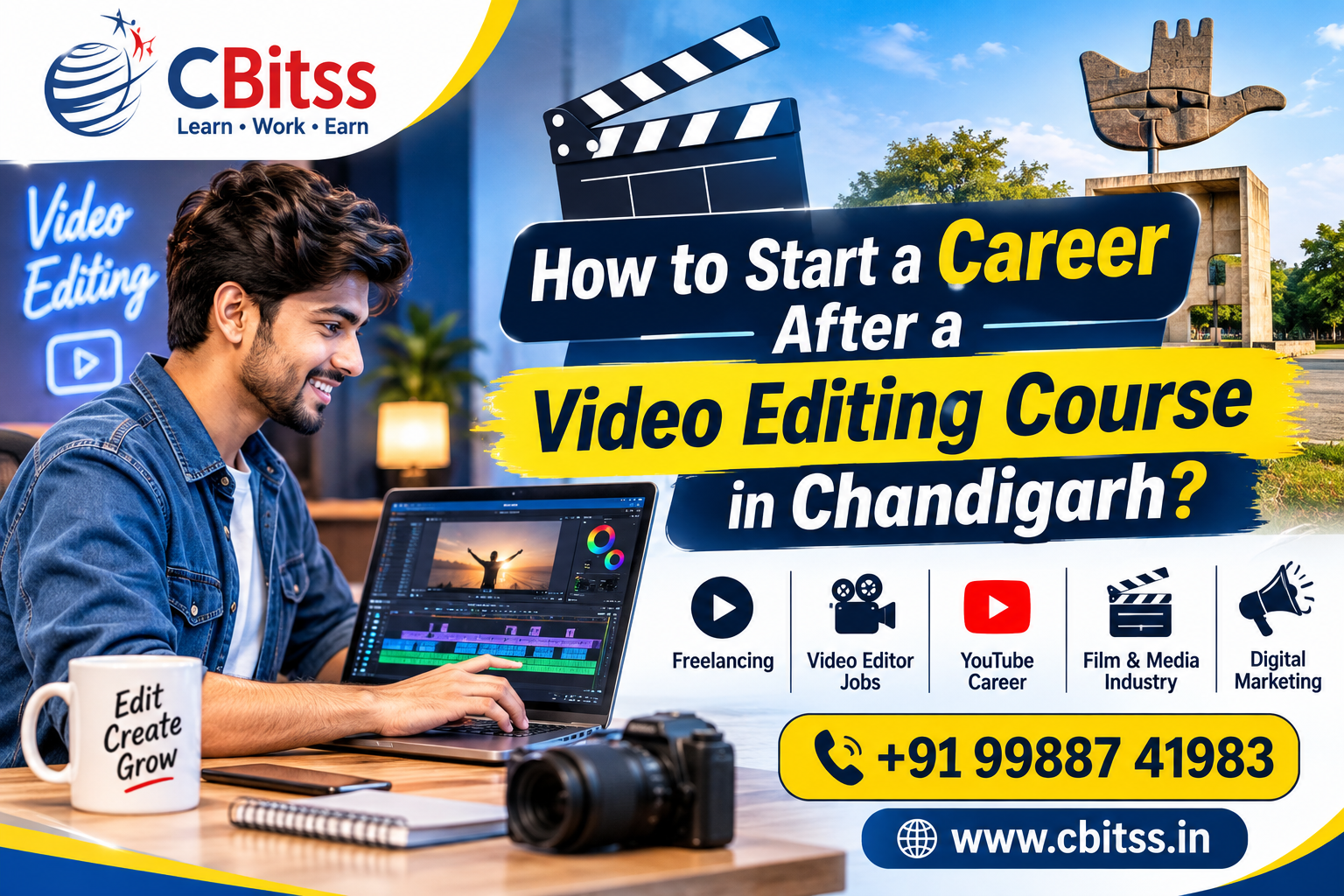
Video editing has become one of the most exciting and rewarding career options in today’s digital world. With the rapid growth of YouTube, Instagram, Facebook, OTT platforms, digital marketing, and online advertising, the demand for skilled video editors is increasing. Businesses, content creators, production houses, and marketing agencies need professional video editors to create attractive and engaging visual content.
If you have a creative mindset and enjoy working with videos, animations, colours, and storytelling, video editing can be an excellent career choice. Learning professional editing skills through a video editing course in Chandigarh can help you understand industry requirements and prepare for different job opportunities.
Whether you are a student, fresher, working professional, or someone looking to develop a new skill, professional training can help you build a strong foundation in video editing.
Let’s explore how you can start your career after completing professional video editing training.
1. Understand the Basics of Video Editing
Before starting your professional journey, it is important to understand what video editing is and how it works. Video editing is the process of arranging video clips, adding transitions, adjusting colours, editing audio, including text, and creating a final video that communicates a message effectively.
A professional video editor works on different types of content, such as:
- YouTube videos and vlogs
- Instagram Reels and short videos
- Wedding and event films
- Promotional and advertising videos
- Educational and tutorial videos
- Corporate presentations
- Music videos and documentaries
- Social media marketing content
Joining professional video editing training in Chandigarh can help you understand these concepts through practical exercises and real-world editing assignments.
2. Learn Professional Video Editing Software
Learning professional editing software is one of the most important steps towards building a successful career. Companies and clients look for editors who can work confidently with industry-standard tools.
Here are some popular software programs you should consider learning:
Adobe Premiere Pro: One of the most widely used video editing applications. It helps editors cut clips, arrange timelines, add transitions, edit audio, and create professional videos.
Adobe After Effects: This software is useful for motion graphics, visual effects, animated titles, logo animations, and creative video compositions.
DaVinci Resolve: Popular for professional video editing, colour correction, colour grading, and audio post-production.
Final Cut Pro: A professional editing application widely used by Mac users for creating high-quality video content.
You don’t need to master every software at once. Start with one editing application, understand its tools, and gradually expand your skills.
3. Focus on Practical Training and Live Projects
Watching tutorials and learning editing tools is not enough to become a professional video editor. You need regular practice and hands-on experience.
A good training program should provide opportunities to work on practical projects, including:
- Editing short promotional videos
- Creating Instagram Reels and YouTube Shorts
- Editing wedding highlights
- Designing animated titles
- Adding background music and sound effects
- Applying colour correction and grading
- Creating professional YouTube videos
Practical learning through video editing training in Chandigarh can help you understand how professional editing projects are completed.
Working on different assignments also helps you improve your creativity, editing speed, and problem-solving abilities.
4. Build a Professional Video Editing Portfolio
A portfolio is one of the most important things you need when applying for video editing jobs. It allows employers and clients to see your actual editing skills instead of relying only on your qualifications.
After completing your training, create a collection of your best video editing projects.
Your portfolio can include:
- A professional YouTube video.
- Two or three Instagram Reels.
- A promotional advertisement.
- A wedding highlight video.
- A motion graphics project.
- A short documentary or storytelling video.
Upload your projects to platforms like YouTube, Behance, or Vimeo. You can also create a dedicated portfolio website.
Keep your portfolio organised and showcase different editing styles. This will help potential employers understand your creativity and technical abilities.
5. Explore Career Opportunities After Video Editing Training
Once you develop the necessary skills and build a portfolio, you can explore several career opportunities.
Here are some popular job roles available in the video editing industry.
Video Editor
A video editor works with raw footage and transforms it into professional videos. Responsibilities include cutting clips, adding transitions, editing audio, applying effects, and creating final video content.
YouTube Video Editor
YouTube creators regularly need editors to produce engaging videos. You can work on educational videos, travel vlogs, entertainment content, podcasts, and tutorials.
Social Media Video Editor
Digital marketing agencies and businesses require short-form videos for platforms like Instagram, Facebook, and YouTube. This role focuses on creating engaging Reels, Shorts, advertisements, and promotional content.
Motion Graphics Designer
Motion graphics designers create animated text, graphics, logos, and visual effects. Learning After Effects can help you explore this creative career option.
Wedding Video Editor
Wedding photographers and production studios hire editors to create cinematic wedding films, highlight videos, and memorable event presentations.
Freelance Video Editor
If you prefer working independently, freelancing can be a good option. You can work with clients, YouTubers, businesses, and digital marketing agencies from different locations.
6. Develop Additional Creative and Technical Skills
To become a successful video editor, you should develop more than just software knowledge. Creativity, communication, and storytelling also play an important role.
Some important skills include:
- Storytelling: Understand how to arrange clips to communicate a meaningful story.
- Creativity: Develop new ideas for transitions, effects, and video presentations.
- Colour Grading: Learn how to improve the visual appearance of videos.
- Audio Editing: Understand background music, sound effects, and voice balancing.
- Time Management: Complete editing projects within deadlines.
- Communication: Understand client requirements and make changes according to feedback.
- Attention to Detail: Identify small mistakes and maintain professional video quality.
These skills can help you stand out from other candidates and improve your professional opportunities.
7. Start Freelancing and Work with Real Clients
Freelancing is another excellent way to begin your career after completing a video editing course. Many small businesses, influencers, YouTubers, and digital marketing agencies outsource their video editing work.
You can find freelance opportunities through platforms such as:
- Fiverr
- Upwork
- Freelancer
- Internshala
Start with small projects and focus on delivering quality work. As you gain experience, you can build long-term relationships with clients and take on more advanced projects.
You can also contact local businesses, photographers, wedding studios, and content creators to offer your editing services.
8. Understand the Salary and Career Growth
Video editing offers different earning opportunities depending on your skills, experience, portfolio, and project complexity.
Freshers can start with entry-level positions, while experienced editors can explore senior editing roles, motion graphics, creative production, and freelance projects.
Your income may depend on several factors:
- Knowledge of professional editing software
- Practical experience and portfolio quality
- Creativity and editing speed
- Type of organisation or client
- Location and industry demand
- Ability to work on advanced projects
Instead of focusing only on salary, concentrate on improving your skills and gaining practical experience. Consistent learning can help you grow professionally.
9. Choose the Right Video Editing Institute in Chandigarh
Selecting the right training institute is an important step towards starting your career. Before enrolling, check whether the institute provides practical training, experienced trainers, software knowledge, and project-based learning.
A professional video editing course in Chandigarh should cover essential editing concepts, industry-standard software, practical assignments, and portfolio development.
CBitss, located in Sector 34, Chandigarh, provides career-orientated professional training designed to help students develop practical skills.
At CBitss, students can focus on learning important editing concepts and understanding how video editing skills are used in real-world projects.
Why consider CBitss for video editing training?
- Practical and skill-based learning.
- Understanding of professional editing software.
- Project-based training approach.
- Guidance from experienced trainers.
- Portfolio development opportunities.
- Career guidance and placement assistance.
Choosing the right institute can help you develop confidence and prepare for opportunities in the creative industry.
10. Follow a Step-by-Step Career Plan
If you are confused about where to begin, follow this simple roadmap:
| Step | What You Should Do |
| Step 1 | Learn basic video editing concepts |
| Step 2 | Master professional editing software |
| Step 3 | Complete practical assignments |
| Step 4 | Create a professional portfolio |
| Step 5 | Apply for internships and jobs |
| Step 6 | Start freelancing and build experience |
| Step 7 | Learn advanced editing and motion graphics |
Following this roadmap can help you move from beginner-level knowledge to professional video editing work.
Conclusion
Starting a career in video editing can be a great opportunity for people who enjoy creativity, technology, and visual storytelling. From YouTube content and social media videos to advertisements, wedding films, and corporate projects, skilled video editors have opportunities across multiple industries.
The key to success is choosing the right training, learning professional software, practising regularly, and building a strong portfolio. Enrolling in video editing training in Chandigarh can help you develop the practical knowledge and confidence required to enter this growing industry.
If you want to turn your creativity into a professional skill, consider joining a video editing course in Chandigarh at CBitss and take your first step towards a creative career.
Start Learning Today at CBitss!
CBitss – Sector 34, Chandigarh
Learn • Practise • Create • Grow