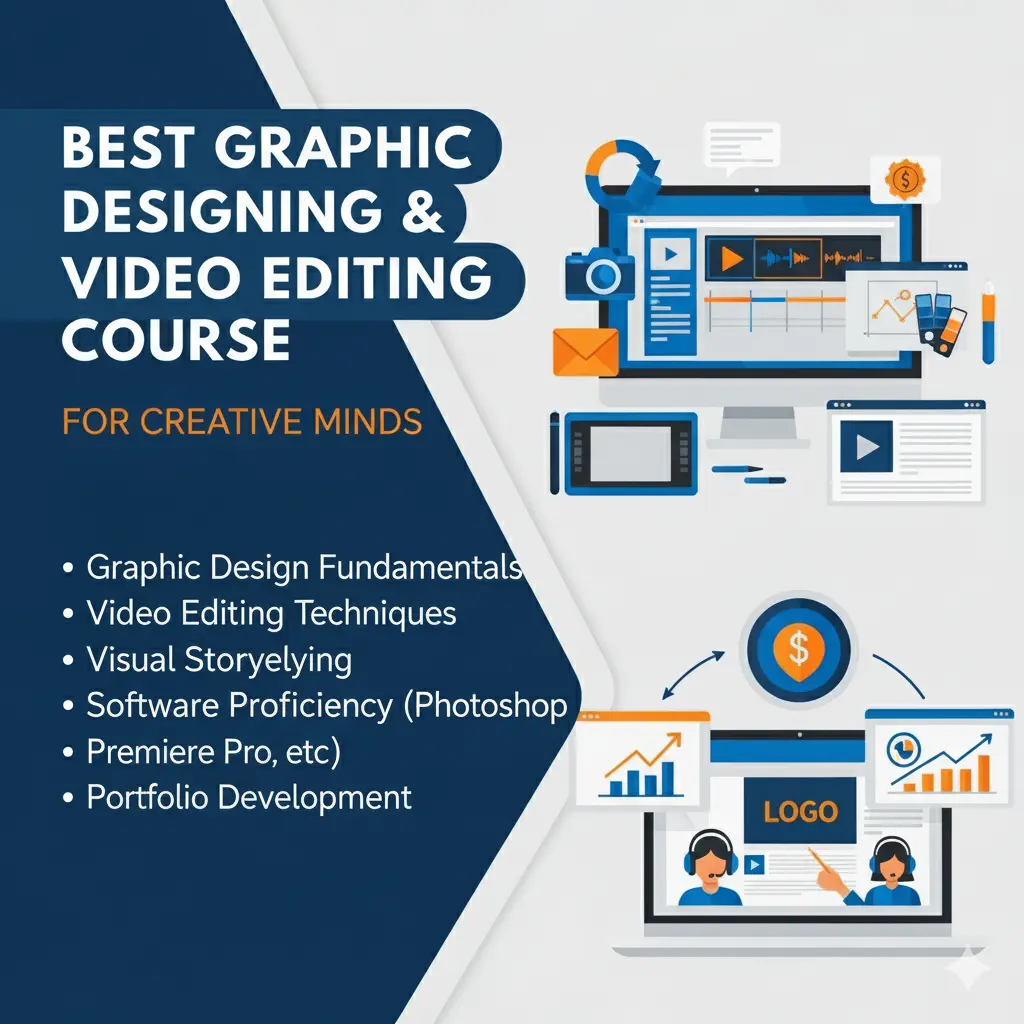
In an era driven by visual storytelling and multimedia content, mastering graphic design and video editing is no longer just a niche skill—it’s a powerful asset. Whether you dream of creating eye-catching visuals, crafting compelling video narratives, or establishing a dynamic online presence, the right training can make all the difference. In this blog, we’ll explore what to look for in a great course, how to choose between different formats, and highlight exemplary options—especially for learners in and around Chandigarh.
Why Graphic Design + Video Editing? A Powerful Duo
A lot of creative projects today demand a combination of skill sets. For instance:
- A YouTube or Instagram video often needs custom thumbnails, animated overlays, and branded graphics.
- A promo video might need motion graphics, title sequences, and color grading.
- A marketing campaign could require posters, social media posts, and edited video reels.
If you learn both video editing and graphic designing course in chandigarh , you become far more versatile and self-reliant—you don’t have to outsource one half of the work.
But not all courses are equal. Let’s dig into the key features you should expect.
What Makes a Course Truly “Best” for Creative Minds?
Here are the main criteria to look for:
- Strong Foundation in Design Principles
A course should begin with fundamentals: composition, color theory, typography, layout, and visual hierarchy. Without those, software tricks alone won’t make you a good designer. - Hands-on Software Training
You need guided, practical training in industry-standard tools:
- For graphic design: Adobe Photoshop, Illustrator, InDesign (or alternatives like Affinity, CorelDRAW)
- For video editing: Adobe Premiere Pro, After Effects, DaVinci Resolve, Final Cut Pro
Make sure the course is not just about button-clicking but teaches workflows, efficiency, shortcuts, project organization, and real-world use cases.
- For graphic design: Adobe Photoshop, Illustrator, InDesign (or alternatives like Affinity, CorelDRAW)
- Project-Based Learning
The best learning comes when you build things: logos, social media posts, short films, motion graphics, video promos, title sequences. These should mirror real client work. Bonus if the course includes capstone or portfolio projects you can showcase. - Mentorship & Feedback
Feedback from instructors or peers is crucial. Mistakes and blind spots are often invisible to us; outside critique helps you grow fast. - Industry Exposure / Internships / Placement Support
A great course should help you connect with real clients or companies, not just teach in isolation. - Flexible Delivery Modes & Timings
Some learners prefer in-person classes, others online or hybrid. The course should accommodate working schedules, weekend batches, or evening sessions. - Lifetime Access / Updates
Software and trends evolve. A course that gives you lifetime access or upgrades ensures your skillset stays current. - Community & Networking
Being around fellow learners helps you stay motivated, collaborate, share resources, and get new ideas.
Spotlight: Course Options in Chandigarh (and Nearby)
If you are in Chandigarh and looking for local, reputable training, here are two highly relevant offerings:
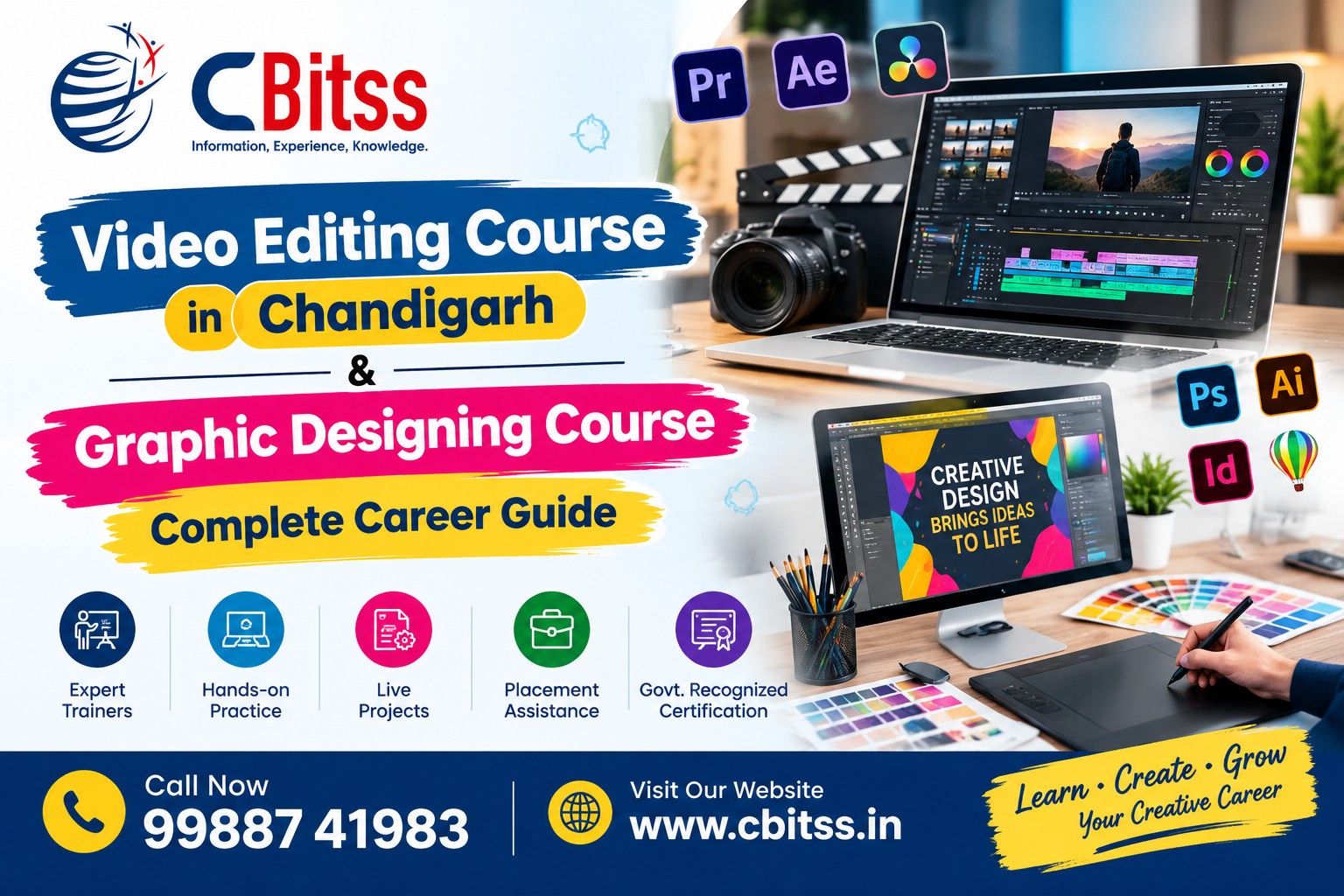
- graphic designing course in chandigarh
This course focuses on building a strong design sensibility from scratch, guiding students through both theory and practical tool mastery.
(Link it: graphic designing course in chandigarh) - video editing course in chandigarh
For those who want to specialize in editing, motion graphics, transitions, and storytelling through video, this course is designed to hone that craft.
(Link it: video editing course in chandigarh)
These two local offerings make it easier for aspiring creators to access hands-on learning, mentorship, and real-world application without having to travel far or rely solely on online resources.
How to Choose the Right Course for You
Here’s a step-by-step decision guide:
- Define your goal
- Want to be a full-stack creator? Pick a course covering both design + video editing.
- Mostly into static visuals? A graphic design course may suffice.
- Passionate about video storytelling? Focus more on editing, motion graphics, and VFX.
- Want to be a full-stack creator? Pick a course covering both design + video editing.
- Check the syllabus thoroughly
Make sure it’s not repetitive or too superficial. Check if it includes advanced modules like color grading, compositing, animation, etc. - Ask for a demo or trial class
See if the teaching style resonates with you—clear explanations, patience, practical approach, good pace. - Review alumni work and placements
Real-world examples from past students tell you a lot about course quality. - Consider the duration, cost, and balance
Don’t overstretch. A shorter intensive may suit some, while others prefer extended courses with breaks and project time. - Ask about software, system requirements, and resources
Will you get access to licensed software, project files, assets, templates, etc.? - Check support after course completion
Will they help with portfolio reviews, freelancing guidance, or job referrals?
Sample Roadmap: What You Should Expect to Learn (Month-wise)
Here’s a sample structure for a 6- to 9-month combined course:
| Month | Focus | Sample Projects |
| 1 | Design foundations, color, typography, layout, concept ideation | Poster, social media post |
| 2 | Photoshop, image editing, retouching, compositing | Photo manipulation, montage |
| 3 | Illustrator / vector graphics, logo design, branding | Logo suite, brand collateral |
| 4 | Video editing basics, timeline, transitions, audio sync | Short video montage, vlog edit |
| 5 | Advanced editing, motion graphics, effects, masking | Title animations, motion logo |
| 6 | Color grading, audio post, export workflows | Graded video, broadcast output |
| 7–9 | Capstone / client project, portfolio, internship | Complete promotional video or multi-asset campaign |
By the end, you should walk away with a portfolio of 5–10 polished projects, client-ready assets, and confidence to take up real freelance or in-house work.
Success Stories & Use Cases
- A graphic designer starts with static visuals, then adds motion skills to produce animated social media posts and reels, increasing value to clients.
- A content creator learns to edit their own travel vlogs, cutting costs and maintaining creative control.
- A small business owner designs branding assets and video promos themselves instead of hiring multiple freelancers.
The flexibility to do both design and editing creates a unique competitive edge in creative careers.
Challenges & How to Overcome Them
- Software overload & overwhelm: The amount of tools can feel vast. Focus first on a core handful and master them.
- Creative block: Work on briefs, constraints (e.g. 30-word rules), daily mini challenges to train your imagination.
- Perfectionism vs productivity: Don’t over polish something—learn when “good enough” is acceptable and move on.
- Keeping skills relevant: Follow design & video trends, join communities, take short update courses.
Final Thoughts: For Creative Minds, It’s More Than Tools
A “best” course doesn’t just teach you buttons and panels. It ignites your vision, refines your aesthetic, gives you the confidence to express ideas visually and tell stories through motion. It connects you with peers, mentors, and opportunities to sharpen on real-world canvases.
If you are in or near Chandigarh, exploring the graphic designing course in chandigarh link above or the video editing course in chandigarh offering is a tangible first step to launching your creative career. Combine that with your passion, persistent practice, and openness to feedback—and you’ll find yourself growing into a capable visual storyteller.
If you like, I can suggest a few more course options (both local and online), or even a weekly learning plan. Do you want me to list them?