In today’s rapidly evolving digital era, the marriage of cloud computing and Linux skills is more crucial than ever for aspiring IT professionals. Many organizations are migrating to the cloud, adopting containerization, microservices, and DevOps workflows. In such a scenario, a robust understanding of Linux and cloud technologies becomes foundational for a successful and future-proof IT career. If you’re in Chandigarh or planning to relocate there, investing in high-quality training can make a significant difference. This blog explores why you should consider Linux Training in Chandigarh and cloud computing Training in Chandigarh, what to expect from such programs, career prospects, and tips for maximizing your growth.
Why Learning Linux and Cloud Together Makes Sense
1. Linux: The Backbone of Modern Cloud Infrastructure
Linux powers the majority of servers and is deeply embedded in cloud environments. Whether it’s for virtual machines, containers, or orchestration tools like Kubernetes, Linux is everywhere under the hood. A proficient Linux administrator can manage file systems, kernel modules, networking layers, permissions, and automation scripts — all skills essential in cloud setups.
2. Cloud Computing: The Future of IT Delivery
Cloud platforms (AWS, Azure, Google Cloud, OpenStack, etc.) allow scalable, on-demand infrastructure, enabling businesses to deploy services globally without large upfront investments in hardware. Understanding how the cloud works — its architecture, service models (IaaS, PaaS, SaaS), networking, storage, security — is key to modern IT roles.
When you combine Linux mastery with cloud knowledge, you become a versatile professional who can bridge infrastructure, operations, and development. Enterprises seek candidates who can not only spin up infrastructure but also optimize, secure, and automate it.
Why Chandigarh Is a Good Hub for IT Learning
Chandigarh, often dubbed as the “City Beautiful,” has evolved into a growing tech education hub. With its good infrastructure, connectivity, and rising number of startups and IT firms, it offers an encouraging environment for learners. Many training institutes in Chandigarh now cater to cloud computing, DevOps, and Linux, bringing well-curated courses closer to students. Leverage these local opportunities so you don’t have to travel far for high-quality training.
What to Expect from a Quality Training Program
When evaluating a Linux or cloud training institute, keep an eye on the following:
1. Hands-On Labs & Real Projects
Theory is important, but the real learning comes from doing. Access to real Linux environments, virtual machines, container setups, and cloud platforms is essential.
2. Updated Curriculum
Linux and cloud evolve fast. The training should cover modern tools: containerization (Docker), orchestration (Kubernetes), Infrastructure as Code (Terraform/Ansible), CI/CD pipelines, serverless, etc.
3. Certifications & Industry Alignment
Look for programs aligned with recognized certifications (e.g., LFCS, RHCSA, AWS Certified Solutions Architect, Azure Administrator) to validate your skills to employers.
4. Experienced Instructors & Mentorship
Trainers who have real industry experience can share insights and help you avoid pitfalls. Also, mentorship during and after training is a plus.
5. Placement Assistance & Support
Institutes that actively help interns or place candidates in job roles signal confidence in their training quality.
The Right Time & Mindset to Start
Whether you’re beginning your IT journey or already have some experience, it’s never too late to skill up:
- Beginners: Start with fundamentals of Linux — commands, file systems, user management — then gradually move to cloud and DevOps.
- Intermediate professionals: Focus on bridging gaps: containerization, automation, scaling, security.
- Advanced learners: Dive deeper into architecture, cost optimization, multi-cloud, hybrid setups, or specializing in a cloud vendor.
Mindset matters. Be curious, willing to experiment, and expect to break and rebuild things—it’s a natural part of learning infrastructure skills.
Middle Section: Inserted Keyword Links
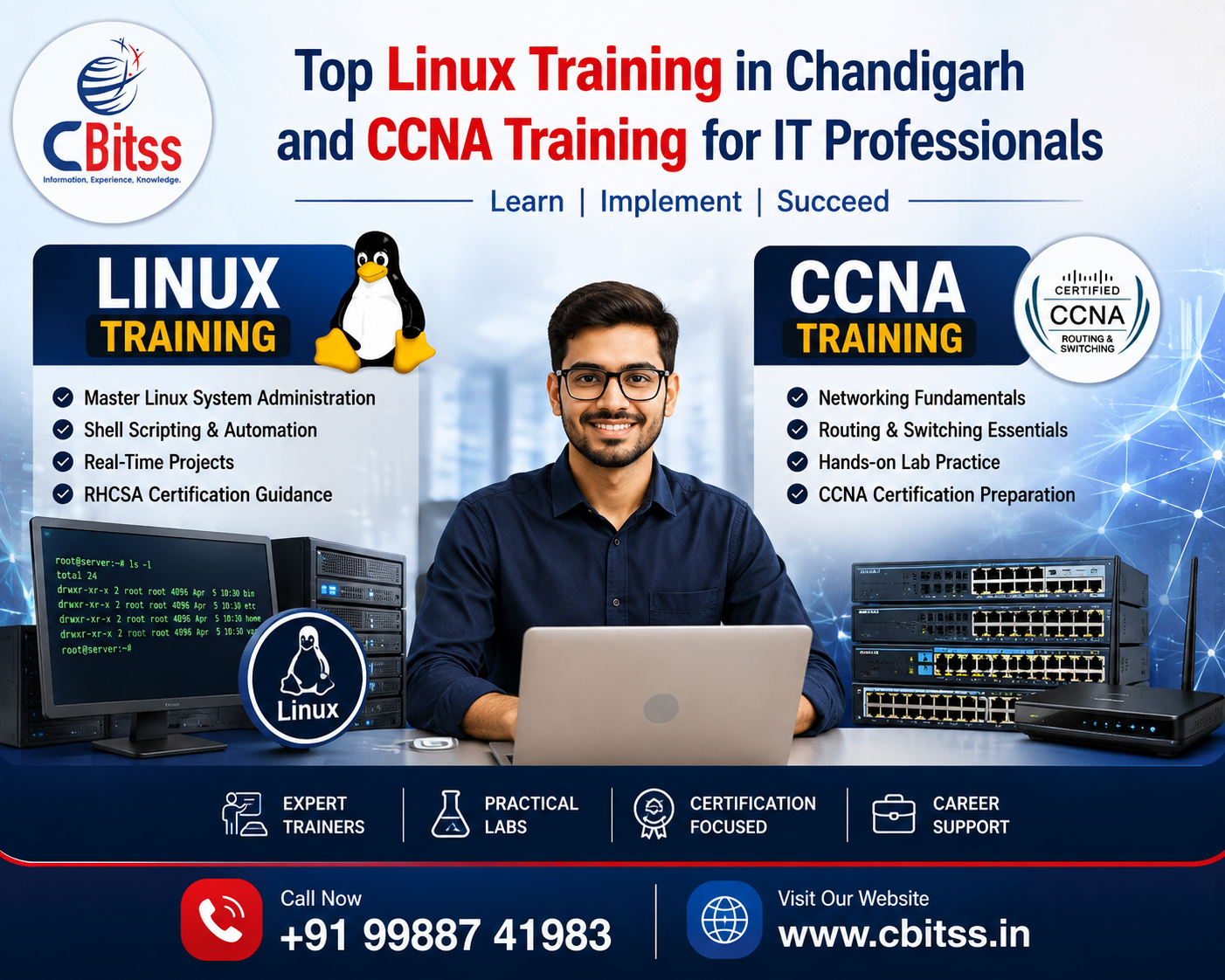
As you explore educational options locally, make sure to check out Linux Training in Chandigarh for thoroughly structured Linux courses, and cloud computing Training in chandigarh to understand how cloud systems are built, deployed, and managed.
How Linux + Cloud Skills Amplify Your Career
Here’s how the synergy of Linux and cloud training can elevate your professional opportunities:
1. Diverse Job Roles
You can pursue roles like Cloud Engineer, Systems Administrator, DevOps Engineer, Site Reliability Engineer (SRE), Kubernetes Engineer, and more.
2. Higher Salary Potential
Professionals with cloud and Linux expertise command premium salaries. Their ability to provide end-to-end infrastructure solutions makes them valuable.
3. Strong Foundation for DevOps & SRE
DevOps relies heavily on automation, configuration, and orchestration — all built on Linux. Add cloud skills, and you can manage complex pipelines, monitor systems, ensure resilience, and optimize performance.
4. Freelancing & Consulting Opportunities
With cloud and Linux knowledge, you can work remotely, advise smaller companies building infrastructure, or maintain systems globally without needing a physical presence.
5. Adaptability Across Technologies
Cloud-agnostic skills like container orchestration, infrastructure as code, and Linux internals help you adapt to new platforms or vendor shifts more easily.
Keys to Making Training Effective
To get the best outcomes from your training, follow these practices:
- Practice Daily: Even small regular sessions help retention — command-line practice, shell scripting, spinning up cloud resources.
- Build a Portfolio: Create small real projects — e.g. deploy a web app using Linux on cloud, use containers, or automate a workflow.
- Contribute to Open Source: Many cloud projects are open source; contributing helps you learn from real code.
- Join Communities: Engage in forums, user groups, hackathons, meetups in Chandigarh, so you can learn from others and network.
- Stay Updated: Cloud and Linux evolve fast. Follow blogs, vendor updates (AWS, Azure, Linux Foundation), and emerging trends (serverless, edge computing).
- Prepare for Interviews & Certifications: Use mock interviews, solve real-world problems, and schedule vendor or vendor-neutral certification exams to benchmark your skills.
Challenges & How to Overcome Them
- Steep Learning Curve: Initially commands, syntax, infrastructure abstractions may feel daunting. Overcome it by incremental learning, repetition, and experimentation.
- Fear of Mistakes: Infrastructure errors can break things. Use sandbox environments and backups.
- Keeping Pace with Evolution: New tools emerge. Solve this by focusing on fundamentals and learning patterns rather than just individual tools.
- Time Constraints: Balancing training with work or studies can be tricky. Allocate dedicated time slots, even if small, and stay consistent.
A Sample Learning Roadmap
| Phase | Skills / Topics | Deliverables |
| Phase 1 | Linux basics, shell commands, permissions | Basic CLI tasks, file manipulations |
| Phase 2 | Linux administration (networking, services, scripts) | Setup a web server on Linux |
| Phase 3 | Cloud fundamentals (IaaS, PaaS), VM provisioning | Launch and manage VM in AWS/Azure |
| Phase 4 | Containers, orchestration (Docker, Kubernetes) | Containerize an app and deploy in cluster |
| Phase 5 | Automation, Infrastructure as Code, CI/CD | Build an end-to-end pipeline automating infrastructure deployment |
| Phase 6 | Advanced topics (multi-cloud, security, monitoring) | Setup logging, autoscaling, and cost optimization in cloud environment |
Each phase should include mini-projects, reflective learning, and incremental challenges.
Why Chandigarh Learners Should Pick Local Institutes
- Local support & community — You can interact in person, ask doubts, attend workshops.
- Cost-effectiveness — You save on travel and can access local deals or scholarships.
- Networking & job leads — Institutes often have tie-ups with nearby companies, helping you land internships or placement.
- Time convenience — Physical classes and labs reduce issues like connectivity or relying purely on virtual environments.
If you are looking for solid infrastructure to support your learning journey, institutions offering well-structured Linux Training in Chandigarh and cloud computing Training in Chandigarh provide curated pathways, hands-on labs, and mentorship — exactly the kind of foundation you need to launch your cloud-enabled IT career.
Final Thoughts & Call To Action
The intersection of Linux and cloud computing is the crucible where modern IT careers are shaped. As organizations across industries continue to migrate workloads, implement microservices, and adopt DevOps, skilled professionals who understand both the underpinnings (Linux) and the deployment environment (cloud) become indispensable.
If you’re serious about stepping into this world, don’t wait — start today. Enroll in a structured Linux Training in Chandigarh to master system fundamentals first. Then progress into cloud computing Training in Chandigarh to gain provider-agnostic and vendor-specific knowledge. Build projects, get certified, collaborate, and stay curious.
Your IT career can transcend the ordinary — with the right skills, your opportunities will multiply: work with cutting-edge technologies, lead infrastructure projects, or build scalable cloud architectures across borders.