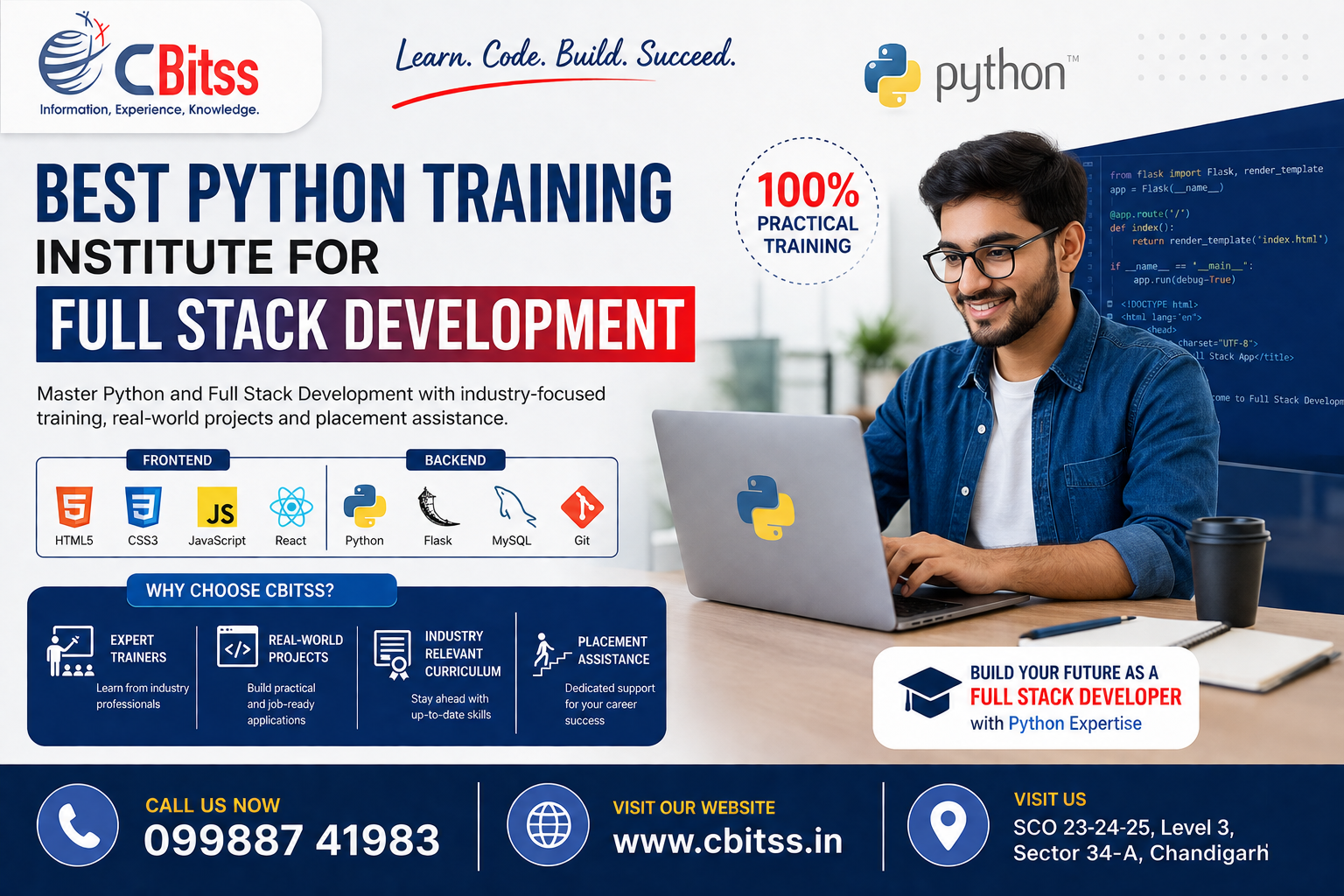
If you’re in Chandigarh and planning to build a strong, job-ready tech career, pairing Python with SQL is one of the smartest paths you can choose. Python helps you work with automation, web development, data analysis, and AI, while SQL gives you the ability to store, query, and manage data—something almost every company needs today. Together, they unlock roles like data analyst, Python developer, backend developer, automation engineer, and even entry-level data scientist.
This complete course guide will help you understand what you should learn, what tools matter, what projects you must build, how long it should take, and how to choose the right institute. If your goal is practical skills and real placement support, use this as your roadmap.
Why Learn Python and SQL Together?
Many learners make the mistake of learning one skill in isolation. But in real jobs, Python and SQL are used together constantly.
- Python is used to write scripts, build applications, automate tasks, work with APIs, analyze datasets, and create models.
- SQL is used to fetch and manipulate data from databases—especially for reports, dashboards, backend applications, and analytics.
For example:
- A data analyst pulls data using SQL and processes/visualises it using Python.
- A backend developer uses SQL to manage application data and Python to build the backend logic.
- An automation engineer uses Python scripts and stores results in a database using SQL.
So if you’re searching for Python training in Chandigarh and also want a career boost with databases, adding SQL training in Chandigarh makes your profile much stronger.
Who Should Join This Course?
A combined Python + SQL program is ideal for:
- College Students (BCA, MCA, B.Tech, B.Sc IT) who want job-ready skills
- Beginners starting from zero and wanting a clear career path
- Working Professionals switching from non-IT to IT/analytics
- Digital Marketing Professionals who want reporting and automation skills
- Business Owners/Freelancers who want automation and data handling
If you can use a laptop, understand basic English, and practice consistently, you can learn both.
What a Complete Python Course Should Cover
A professional and career-focused course is not just theory. It must include coding practice, assignments, tools, and projects.
1) Core Python Fundamentals
This is where you build your base:
- Variables, data types, operators
- Conditions (if/else), loops
- Functions, modules, packages
- Lists, tuples, dictionaries, sets
- String handling and file handling
- Exception handling
2) Object-Oriented Programming (OOP)
Many real-world Python applications use OOP:
- Classes and objects
- Inheritance, polymorphism
- Encapsulation, abstraction
- Real use cases and mini projects
3) Working With Files + Data
- Reading/writing CSV and text files
- Working with JSON
- Data cleaning basics
4) Libraries Used in Jobs
A complete course should include:
- NumPy basics
- Pandas for data manipulation
- Matplotlib/Seaborn for visualization (optional but recommended)
- Basics of API handling using requests
5) Python for Automation (Highly Valuable)
This is a big plus for jobs:
- Automating repetitive tasks
- Working with Excel files
- Web scraping basics (optional)
- Scheduling scripts
A good Python training in Chandigarh should push you toward practical usage, not just syntax.
What a Complete SQL Course Should Cover
Now let’s talk about what matters in SQL training in Chandigarh. Many students only learn SELECT queries, but companies need much more.
1) SQL Basics
- Database concepts, tables, rows, columns
- SELECT, WHERE, ORDER BY
- LIMIT, DISTINCT
- LIKE and pattern matching
2) Filtering and Sorting Properly
- AND/OR/NOT logic
- IN, BETWEEN
- NULL handling
3) Joins (Most Important Topic)
Real-world SQL is mostly joins:
- INNER JOIN
- LEFT JOIN / RIGHT JOIN
- FULL OUTER JOIN (concept-based)
- Self joins
4) Aggregations and Grouping
- COUNT, SUM, AVG, MIN, MAX
- GROUP BY, HAVING
- Real reporting queries
5) Subqueries and CTEs
- Nested queries
- Common Table Expressions (CTEs)
- Use cases for analytics
6) Database Design Basics
Even if you’re not a DBA, you should know:
- Primary key, foreign key
- Normalization
- Relationships
Python + SQL Tools You Should Learn
A serious training program should help you practice using real tools:
For Python
- VS Code / PyCharm
- Jupyter Notebook (for analytics)
- Git and GitHub basics (huge plus)
For SQL
- MySQL Workbench / PostgreSQL
- DB Browser tools
- Creating databases, importing CSV datasets
If an institute teaches only “notes” and doesn’t focus on tools, you’ll struggle in interviews.
Real Projects You Must Build (Non-Negotiable)
A strong course should include at least 4–6 solid projects. Here are examples you should aim for:
SQL Projects
- Sales database reporting (joins + group by)
- Employee database query tasks
- Customer segmentation queries
- SQL case studies (like e-commerce datasets)
Python Projects
- Student management system (OOP + file handling)
- Automation script (rename files, organize folders, Excel automation)
- Data analysis mini project (Pandas + charts)
- API project (fetch and process data)
Python + SQL Combined Project (Best for Jobs)
- Build a mini analytics system:
- SQL pulls data from database
- Python cleans it and creates reports
- Export report to Excel/CSV
- SQL pulls data from database
This combination instantly makes your profile more “company-ready.”
Course Duration and Best Learning Path
Here’s a practical roadmap:
Option A: Fast Track (For learners with time)
- Duration: 6–8 weeks
- Daily practice: 2–3 hours
- Best for: students on break, career switchers
Option B: Standard Track (Recommended)
- Duration: 10–12 weeks
- Practice: 1–2 hours daily
- Best for: college + working people
Option C: Weekend Track
- Duration: 3–4 months
- Best for: working professionals
No matter what plan you choose, consistency matters more than speed.
How to Choose the Best Institute in Chandigarh
When selecting a training center for Python training in chandigarh and SQL training in Chandigarh, check these points:
- Trainer Experience: Ask if the trainer has real industry/project experience
- Hands-on Practice: Daily lab work is a must
- Project Portfolio: Must include real datasets and SQL join-based projects
- Interview Prep: Mock interviews + coding practice
- Placement Support: Resume + LinkedIn + job referral guidance
- Batch Size: Smaller batches are better for doubt-solving
- Demo Class: Always take a demo before paying full fees
A quality institute will focus on building your GitHub portfolio and confidence—not just completing the syllabus.
Career Roles After Python + SQL
Once you build projects and practice well, you can target roles like:
- Data Analyst (SQL + Python)
- Junior Python Developer
- Backend Developer (Python + database)
- MIS Executive (Advanced Excel + SQL + Python automation)
- Business Analyst (SQL reporting + Python basics)
Even for non-tech backgrounds, SQL helps you enter reporting and analytics roles faster.
Final Thoughts
Learning Python and SQL together is one of the most practical career decisions you can make in 2026. Chandigarh has many training options, but the “best” course is the one that gives you strong fundamentals, real projects, tool-based training, and interview preparation.
If you’re serious about a job-ready skillset, choose a program that includes:
- Python fundamentals + OOP + libraries + automation
- SQL basics + joins + aggregation + subqueries + case studies
- 4–6 projects + 1 combined Python-SQL project
- Mock interviews + resume building + portfolio guidance
With the right course structure and consistent practice, you can confidently apply for entry-level roles and grow quickly.